
Archive
-
🇰🇭 Addressing the Gap: How the Khmer Semantic Search Engine (KSE) Works & What That Can Teach Us as SEOs 🙌

We’ll explore Khmer Semantic Search Engine (KSE), which utilizes advanced semantic matching techniques to improve the search experience for Cambodians and other Khmer speakers.
-
What I Learned from “Back to Basics for RAG w/ Jo Bergum” That’s Useful Context for SEO Today

What I learned from a recent talk about RAG basics from Jo Kristian Bergum about IR systems that I found helpful from an SEO perspective.
-
How Does Perplexity Work? A Summary from an SEO’s Perspective, Based on Recent Interviews

Perplexity is an “answer engine,” not a search engine. Curious how it works? I looked at several interviews from Perplexity team members for this summary.
-
Summer “SLaM” & “CoSMo” Kramer: Investigating “Compressing Search with Language Models,” a Google Research Paper, & Why SEOs Should Care (Probably)

We’ll explore SLaM and CoSMo from a Google paper, “Compressing Search with Language Models,” and implications for SEOs in this Hamsterdam Research post.
-
Comparing a Verywell Mind Page (YMYL Topic) in 2017 vs. 2024 to See How On-Page SEO Evolves (& Its Limits), a Hamsterdam History Lesson
Comparing the on-page SEO of a Verywell Mind page on mindfulness meditation in 2017 and 2024 to see how SEO evolves, a Hamsterdam History post.
-
🦄 “Unicorn” Clicks & the Magic of Etymology for SEO Research, a Hamsterdam Marketing Lesson

What is a “unicornClick” attribute in the API Content Warehouse? In Hamsterdam Marketing, we’ll explore the word’s origins (or etymology). Buckle up!
-
Stumbling Upon Google Engineer Ni Lao’s Work, & Exploring What It Can Teach Us about ML, IR & NLP for SEO Insights (a Hamsterdam Research Post)

In this Hamsterdam Research post, we look at the work of Ni Lao, a Google engineer, for learnings about machine learning, information retrieval, and NLP.
-
Language, Art & Culture: SEO Lessons from a Cultural Anthropology Textbook (for Keywords, Content, Images & Page Experience)
This Hamsterdam Marketing lesson examines keyword, content, image, and page experience lessons for SEO gleaned from a cultural anthropology textbook.
-
Everything You Need to Know (Or A Lot of It, Probably) from Google Search Central’s SOTR Podcasts (as Told Through Gemini Prompted with 75 Transcript PDFs)

I put 75 transcripts from Google Search Central Search Off the Record (SOTR) podcast episodes into Gemini 1.5 Pro and asked questions. Here’s how it went.
-
Why Vanessa Fox’s 2008 Interview with Eric Enge About User-First & Holistic SEO is Still Relevant Today (and Tomorrow), a Hamsterdam History Lesson

In this Hamsterdam History lesson, we explore the holistic and user-first SEO principles from Vanessa Fox’s 2008 interview with Eric Enge.
-
Epistemic vs. Aleatoric Uncertainty in LLMs, via a Google DeepMind Paper, “To Believe or Not to Believe Your LLM,” & Why SEOs Should Care (Likely)

In this Hamsterdam Research, we’ll explain Google DeepMind’s paper “To Believe or Not to Believe Your LLM” and why it’s relevant to SEOs (likely).
-
Google AI Overviews: What We Can Learn from the Links in Liz Reid’s Latest Blog Post in The Keyword

Liz Reid, Head of Google Search, recently wrote a blog post for The Keyword about AI Overviews. Let’s follow the links in it to see what we can learn.
-
USER-LLM: Contextualizing LLMs with User Embeddings for Enhanced Personalization (via Google Research), & Why SEOs Should Care (Maybe)

This rendition of Hamsterdam Research explores USER-LLM, a novel framework from Google Research for contextualizing LLMs with user embeddings of user interaction data.
-
Could Anthropic’s Identification of Millions of Features (Concepts) Activated Inside Its LLM (Claude 3 Sonnet) Influence Our Semantic SEO Strategies? (Maybe)
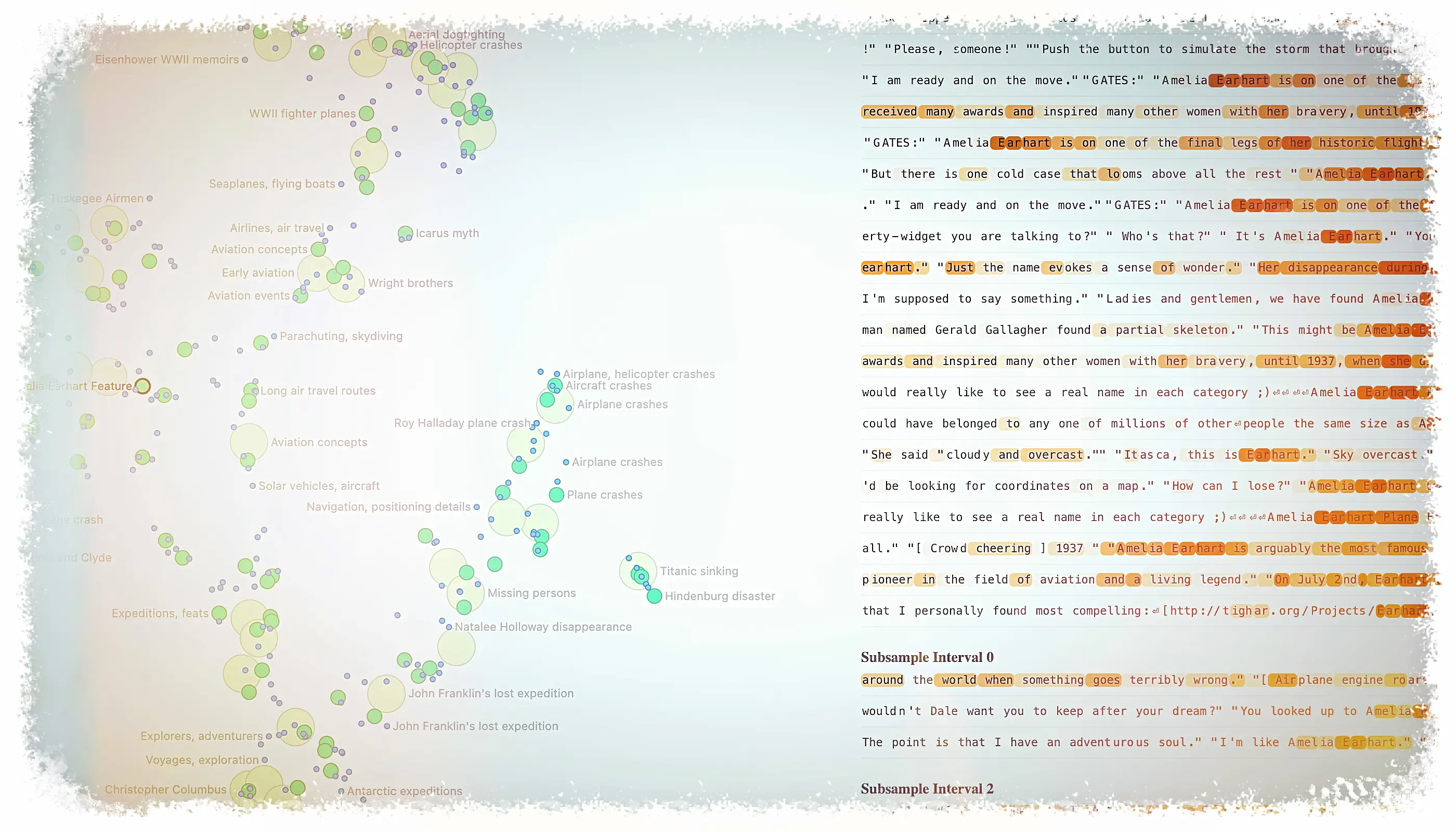
Anthropic identified millions of features (concepts) activated in Claude 3 Sonnet. Hamsterdam Research reviews the implications for semantic SEO strategies.
-
How Google Understands (Comprehends) Synonyms: Matt Cutt’s 2010 Blog Post Compared to (Contrasted with) Search Today (A Hamsterdam History Lesson)

How does Google Search understand (comprehend) synonyms? Let’s compare Matt Cutt’s blog in 2010 vs. today’s documentation in this Hamsterdam History lesson.
-
Let’s Talk About Personas in the Context of SEO, a Hamsterdam Marketing Lesson

In this first Hamsterdam Marketing lesson, we’ll talk about personas, how to create them, and how they apply to SEO strategies and content creation.
-
“Book Me A Trip To Washington, DC”: Revisiting Google Research’s Ambitions with Neural Networks in 2013 a Decade Later, After Google I/O 2024 (Hamsterdam History)
In this Hamsterdam History article, we’ll take a look at Google Research’s AI-driven goals in 2013 to see if they’ve come true after Google I/O 2024.
-
Doing the Global Minimum: Thinking About SEO More in the Context of Neural Network Architectures (A Hamsterdam Research Opinion Piece)

In this opinion piece, we broaden the SEO lexicon to include more deep neural network terminology, expanding our worldview with the global minimum.
-
Investigating TeraHAC (via Google Research), a Novel Graph Clustering Algorithm for Massive Datasets, & Why SEOs Should Care (Maybe)

In this rendition of Hamsterdam Research, we look at TeraHAC, a novel graph clustering algorithm from Google Research for large datasets.
-
Revisiting the Cre8tive Flow Blog in 2005 to Learn about Jared Spool and the Timelessness of Usability (for SEO), A Hamsterdam History Lesson
Jared Spool was called the “bad boy” of usability. Looking back at a 2005 post from Cre8tive Flow Blog, we can see the timelessness of the topic.