
Examining New Research, “Less can be More: Relieving RAG Bottlenecks via Evidence Frontloading and Pressure-Adaptive Budgeting,” for SEO/GEO Insights (Hamsterdam Research)
By Ethan Lazuk
Last updated:

Welcome to another edition of Hamsterdam Research! 🐹
This is where we look at recent AI research papers to learn what they’re talking about and explore their hypothetical implications for the future of search and SEO/GEO strategies.
This time, we’ll look at research called, “Less can be More: Relieving RAG Bottlenecks via Evidence Frontloading and Pressure-Adaptive Budgeting.”
It was published on August 25, 2026, and its authors are Weibin Cai and Reza Zafarani.
Quickly, why should SEO/GEO professionals care about this research?
AI retrieval isn’t necessarily about retrieving the largest possible set of relevant pages. The value of a source may depend on how much unique evidence it contributes to the answer relative to the other sources retrieved.
This paper shows that in RAG systems, more retrieved content isn’t necessarily better. The strongest results came from prioritizing a smaller set of documents that were not only relevant, but complementary and useful for completing an evidence chain — in other words, evidence-dense candidate sets achieved higher final recall with fewer documents reranked.
For GEO, the implication is that being relevant may not be enough. A source may become more valuable when it contributes distinct evidence that helps complete or corroborate an answer alongside other sources. That doesn’t prove commercial AI search engines work this way, but it offers a useful model for thinking beyond rankings toward “evidence coverage” and “source complementarity.”
Let’s start by reviewing the paper’s abstract.
Here’s the abstract (with my highlights):
“Existing methods for improving Retrieval-Augmented Generation (RAG) efficiency mainly optimize downstream LLM generation, such as context compression or serving optimization. However, RAG is an end-to-end system, and its bottleneck can shift between upstream reranking and downstream generation under different serving loads and reranking budgets. In this paper, we first empirically characterize this shifting-bottleneck behavior and show that upstream reranking can become the dominant bottleneck under high query rates or large reranking budgets. Reducing the reranking budget can relieve this bottleneck, but it may also drop supporting evidence and degrade recall. To address this problem, we propose PACE (Prioritized Adaptive Coverage of Evidence), a training-free framework that combines evidence frontloading with pressure-adaptive budgeting. PACE first reorders candidates by marginal evidence coverage, prioritizing documents that are query-relevant, complementary, and useful for forming multi-hop evidence chains. We show that this objective is monotone submodular, giving greedy selection a approximation guarantee. PACE then dynamically adjusts the reranking budget according to the relative pressure of the reranker and the LLM. Experiments on three multi-hop QA datasets and online serving simulations show that PACE improves evidence recall, reduces p95 latency under ranking-heavy workloads. More importantly, the two components together reveal that less can be more: an evidence-dense top-ranked candidates enable higher final recall with fewer reranked documents.“
Next, let’s break down the paper’s key vocabulary terms:
- Retrieval-Augmented Generation (RAG): A system where an LLM retrieves external information and uses it as context before generating an answer.
- Reranking: A second-stage ranking process that takes initially retrieved documents and reorders them to decide which ones are most useful to send to the LLM.
- Reranking Budget: The number of retrieved candidates a system is willing to send through the reranker. Larger budgets can improve coverage but also increase latency and processing cost.
- Evidence Frontloading: Reordering candidates so that documents containing the most useful supporting evidence appear earlier in the candidate set.
- Evidence Recall: A measure of whether the retrieved set contains the supporting information needed to answer the question.
- Marginal Evidence Coverage: Evaluating a document not just by its own relevance, but by how much new, uncovered evidence it adds to the documents already selected.
- Complementary Evidence: Information that adds a different but useful piece of support rather than simply repeating what other documents already say. This is especially important for multi-source or multi-hop answers.
- Multi-Hop Evidence Chain: A sequence of supporting facts from multiple documents that must be connected to fully answer a question. A document may therefore be useful even when it is not the most directly relevant page to the original query.
- Evidence-Dense: A candidate set containing a high concentration of useful, complementary evidence, which the paper finds can outperform reranking a larger but noisier set of documents.
Perfecto. Let’s take a deeper look at the research paper’s contents now.
If you want to follow along, you can grab a PDF or the HTML version on arXiv.
The full paper has 6 sections.
We’ll summarize the main ones below.
1. Introduction
The authors then begin their formal introduction after Figure 1, starting with, what I think, is a helpful discussion on RAG:
“RAG has become a widely used paradigm for equipping Large Language Models (LLMs) with external knowledge across diverse downstream tasks (Shuster et al., 2021; Lewis et al., 2020; Borgeaud et al., 2022). A typical RAG pipeline first retrieves query-relevant chunks from a corpus using a dense retriever (Karpukhin et al., 2020; Xiong et al., 2020a; Khattab and Zaharia, 2020), then applies a reranker (Nogueira and Cho, 2019; Sun et al., 2023; Nogueira et al., 2020) to refine their order and feeds the top- chunks to the LLM as context. The quality of the generated answer therefore largely depends on whether the context (top- chunks) covers the evidence needed to answer the query. Increasing can improve evidence recall, but longer contexts also make RAG systems harder to process effectively and efficiently: useful information may be lost in the middle (Liu et al., 2024), noisy sentences can degrade generation (Shi et al., 2023), and long inputs introduce substantial inference overhead (Déjean and Clinchant, 2026; Yu et al., 2024).”
They further explain, “RAG is an end-to-end system, and improving it requires coordinating upstream retrieval/reranking with downstream generation for both effectiveness and efficiency,” however, “approaches that mainly optimize downstream generation may not generalize across different RAG configurations and serving loads.”
“When queries arrive frequently and many documents must be reranked,” they explain, “the ranking stage can become the bottleneck; otherwise, latency may be dominated by generation.”
They continue: “how to dynamically relieve upstream ranking bottlenecks while preserving evidence recall remains an open problem. A promising solution requires two key properties, as illustrated in Figure 1:”
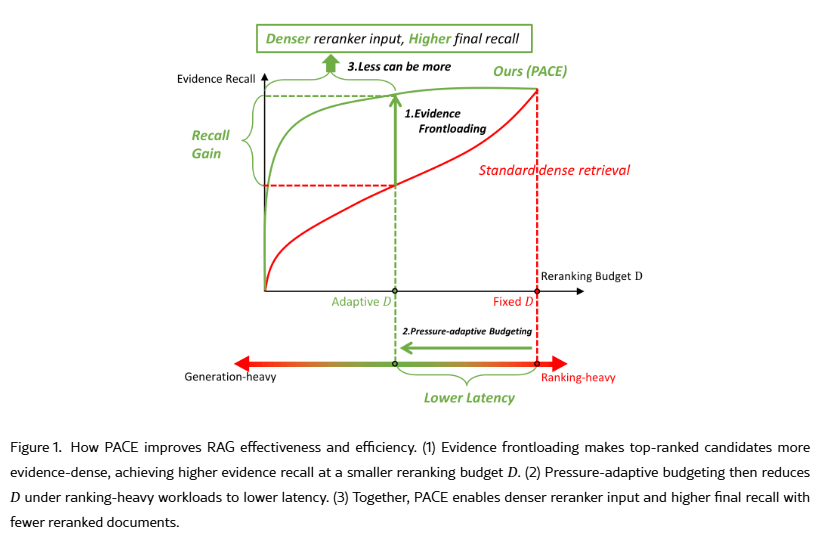
Figure 1 is basically a conceptual summary of why PACE says “less can be more.”
The vertical axis is evidence recall, or how much of the evidence needed to answer the question has been captured. The horizontal axis is the reranking budget D, or how many retrieved documents the system sends through the more expensive reranking stage.
The red line represents standard dense retrieval. To capture a high amount of evidence, it may need to rerank a relatively large number of documents.
PACE, shown in green, changes this in two steps:
- Evidence frontloading: PACE moves the most useful and complementary evidence toward the beginning of the candidate set. That lets it reach high evidence recall at a smaller reranking budget than standard retrieval.
- Pressure-adaptive budgeting: When reranking becomes the system bottleneck, PACE can reduce how many documents it reranks, moving from the larger fixed to the smaller adaptive . That reduces processing pressure and therefore lowers latency.
The top of Figure 1 is the key takeaway: because the smaller candidate set is more evidence-dense, PACE can send fewer documents into the reranker while ultimately getting higher evidence recall.
In summary, retrieving or reranking more documents does not necessarily produce better evidence for an LLM. If the candidate set contains highly relevant, complementary evidence, a smaller set can outperform a larger, noisier one.
The authors lastly define some of the key vocabulary terms we saw earlier:
“Evidence frontloading. This is especially important for multi-hop questions, where answering a query often requires multiple supporting documents rather than a single highly relevant chunk. If these supporting documents can be frontloaded into the first few candidates, the system can use a smaller reranking budget, reducing upstream workload while preserving evidence recall. … In contrast, the goal in this scenario is not to acquire new evidence through extra retrieval steps, but to prioritize evidence within an existing candidate pool so that a smaller reranking budget can still preserve recall under serving pressure.”
“Pressure-adaptive budgeting. Instead of relying on a fixed budget, it should dynamically choose the largest budget that does not make reranking a bottleneck relative to generation. This requires jointly considering upstream reranking pressure and downstream generation pressure, so that the system can preserve as much evidence as possible while relieving ranking-heavy workloads. Together, these two properties enable the system to use a smaller reranking budget with higher evidence recall, thereby reducing upstream bottlenecks while maintaining or even improving evidence recall.“
2. RAG Bottlenecks Shift Across Configurations and Loads
“In a RAG system, the LLM contains most of the parameters and computational complexity, so it is often assumed to be the main serving bottleneck. However, the bottleneck is not always fixed at generation. It can shift between upstream reranking and downstream generation under different model choices, configurations (e.g., reranking budget ), and serving loads (e.g., queries per second).”
Two conclusions stem from this section:
- Model size affects bottleneck tendency, while load and reranking budget determine the actual bottleneck.
- Relieving downstream bottlenecks cannot necessarily reduce upstream reranking pressure.
3. PACE: Prioritized Adaptive Coverage of Evidence
“To relieve shifting bottlenecks, the system should adaptively allocate the reranking budget rather than using a fixed value. However, simply reducing may miss necessary evidence and degrade answer quality. We therefore propose PACE (Prioritized Adaptive Coverage of Evidence), to pace the RAG system by addressing two requirements: (1) adapting the reranking budget to system pressure, and (2) preserving evidence recall by moving useful evidence into top-ranked candidates.“
In short, Section 3 introduces PACE (Prioritized Adaptive Coverage of Evidence), the authors’ proposed method for making RAG systems both more efficient and better at preserving useful evidence. It has two main parts: evidence frontloading and pressure-adaptive budgeting.
PACE moves the most useful supporting documents toward the top of the retrieved list. It favors documents that are relevant and add new information, instead of repeating evidence already covered. That’s evidence frontloading.
PACE also changes how many documents it reranks depending on system load. If reranking is getting overloaded, it processes fewer documents. If the system has capacity, it can process more. The goal is to stay fast without losing important evidence. That’s pressure-adaptive budgeting.
4. Experiments
The experiments suggest that AI retrieval can benefit more from a smaller set of highly relevant, complementary evidence than from simply processing more documents.
Let’s take a look at some key takeaways from the Experiments section:
1. PACE improved evidence recall across all three datasets, especially when the reranking budget was small.
On HotpotQA, PACE using only 20 reranked documents achieved roughly the same evidence recall as the best baseline using 40.
2. Simply adding diversity was not enough.
Methods like MMR and Dartboard sometimes performed worse because they tried to avoid documents that seemed too similar. But for multi-hop questions, similar documents may still contain different facts that are all needed to build the complete answer.
3. Direct query relevance alone was not enough either.
PACE worked best when it combined documents that directly matched the query with documents that were connected to other useful evidence. That supports the idea that a source can matter even if it is not the most obvious direct match to the original query.
4. PACE reduced latency by reranking fewer documents when the system was under pressure.
As query volume increased, the fixed-budget system built up a reranking queue, while PACE reduced its reranking budget and kept latency much more stable.
5. The strongest result is the paper’s “less can be more” finding.
After reranking, PACE achieved the highest recall among the five documents ultimately sent to the LLM, even beating the fixed 100-document reranking baseline. The authors argue that adding more candidates can introduce noise rather than improve the final evidence set.
6. At the highest tested load, PACE used roughly half the reranking budget but achieved about 20% higher recall@5 than the fixed 100-document baseline.
That is probably the most striking number from the Experiments section.
5. Conclusion
In this paper, we study RAG as an end-to-end serving system and show that its bottleneck is not fixed at LLM generation. Instead, the dominant bottleneck can shift between reranking and generation as query arrival rates and reranking budgets change. Motivated by this observation, we propose PACE, a training-free framework that relieves upstream reranking bottlenecks while preserving evidence recall. PACE frontloads useful evidence into the top of the candidate ranking through a monotone submodular marginal coverage objective, and then adaptively selects the reranking budget based on real-time reranker and LLM pressure. Experiments on multi-hop QA datasets and online serving simulations demonstrate that PACE improves evidence recall, substantially reduces latency under ranking-heavy workloads, and shows that less can be more when the top-ranked candidates are evidence-dense: a smaller reranking budget can lead to higher final evidence recall.
Knowing what we do now, why should SEO/GEO professionals care about “Less can be More: Relieving RAG Bottlenecks via Evidence Frontloading and Pressure-Adaptive Budgeting”?
The broader GEO lesson is to think beyond “How do I rank for this query?” and toward “What evidence does my content contribute that helps an AI system build a complete answer?”
Let’s look at five more key takeaways:
1. Relevance alone may not be enough.
PACE performed best when it considered both direct query relevance and whether a document added useful evidence alongside other sources. For GEO, that suggests content should contribute something meaningful to the overall answer, not just match the query.
2. More retrieved documents does not necessarily mean a better answer.
PACE sometimes achieved higher final evidence recall with a much smaller reranking pool because the smaller set contained denser, more useful evidence.
3. Unique, complementary information has value.
The system favored documents that filled gaps in the evidence rather than simply repeating what had already been covered. That supports creating content that adds distinct facts, explanations, data, or context.
4. “Different” is not automatically better.
Some diversity-focused methods performed worse because they filtered out similar documents that actually contained different facts needed to complete an answer. For GEO, the lesson is that topical overlap with other authoritative sources is not necessarily a weakness if your page contributes additional evidence.
5. Initial retrieval is only part of AI visibility.
A document can be retrieved but still fail to make the smaller set ultimately passed to the LLM. This research highlights that retrieval is only one stage: a document may also need to contribute enough useful evidence to remain in the smaller context ultimately passed to the LLM.
Caveat: this was a specific experimental RAG system using multi-hop QA datasets, not a study of Google AI Overviews, ChatGPT Search, or another commercial search product.
Outro
I hope you’ve enjoyed this edition of Hamsterdam Research! 🐹
Feel free to comment below or contact me with your feedback.
Stay tuned for another new article, hopefully next week, or check out related research posts below.
Until next time, enjoy the vibes:
Thanks for reading. Happy optimizing!

Related research articles:

The Prompt Isn’t Always the Query: What Conversation Context Means for SEO and GEO (Hamsterdam Research)
The Prompt Isn’t Always the Query: What Conversation Context Means for SEO and GEO (Hamsterdam Research) By Ethan Lazuk Last updated: Welcome to another edition of Hamsterdam Research! 🐹 This is where we look at recent AI research papers to learn what they’re talking about and explore their hypothetical implications for the future of search…

The AI Assistant Is Part of the Search Journey: What New Research, “Role of Personality in Conversational Information Seeking,” Means for SEO/GEO (Hamsterdam Research)
The AI Assistant Is Part of the Search Journey: What New Research, “Role of Personality in Conversational Information Seeking,” Means for SEO/GEO (Hamsterdam Research) By Ethan Lazuk Last updated: Welcome to another edition of Hamsterdam Research! 🐹 This is where we look at recent AI research papers to learn what they’re talking about and explore…

Examining New Research, “AI in Search Reduces Publisher Referrals Without Improving User Experience: Experimental Evidence,” for SEO/GEO Insights (Hamsterdam Research)
Examining New Research, “AI in Search Reduces Publisher Referrals Without Improving User Experience: Experimental Evidence,” for SEO/GEO Insights (Hamsterdam Research) By Ethan Lazuk Last updated: Welcome to another edition of Hamsterdam Research! 🐹 This is where we look at recent AI research papers to learn what they’re talking about and explore their hypothetical implications for…
Leave a Reply